A Second Look: Scaling the Heights After a few unsuccessful attempts at other locations the following day, the pull of St. Brigid’s brought us back. This second visit allowed us to push deeper into the parts of the hospital that had remained hidden during our first pass.
20th Century Hardships and Closure While the early history was defined by overcrowding, the mid-20th century brought the “horror” of institutionalization. Patients often spent decades here, forgotten by the outside world. It wasn’t until the 1960s and 70s that the focus shifted toward community care, though the hospital didn’t fully cease its psychiatric operations until the early 21st century (with various units closing between 2001 and 2013).
The Clock Tower and the Medical Mystery One of the highlights of this revisit was finally gaining access to the Clock Tower. In a bizarre twist, we found the original asylum bell still hanging in its timber frame. It bore the scars of an attempted theft; thieves had tried to cut the massive bell in half to steal the metal, but gave up halfway through, leaving a deep, jagged gash in the bronze.
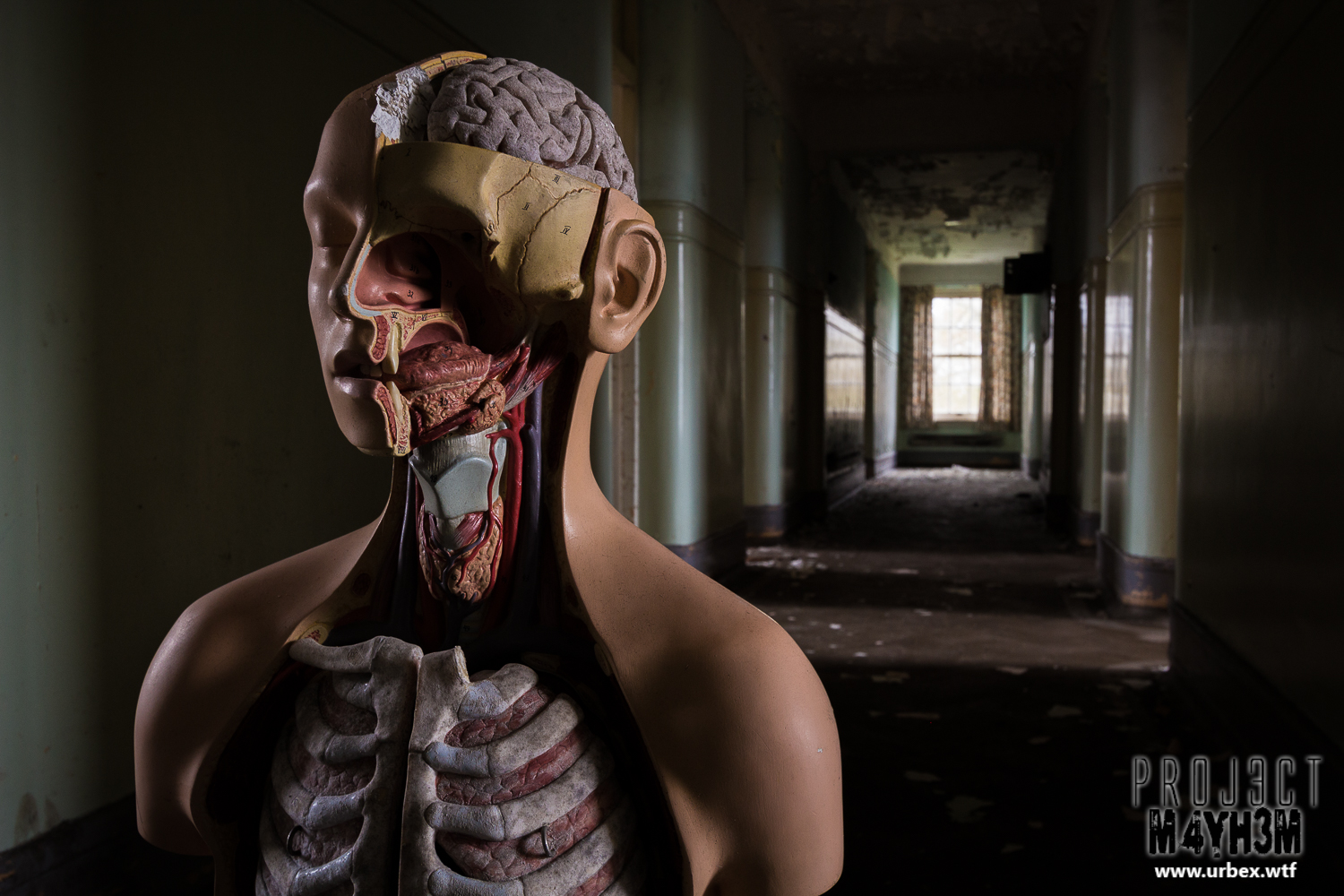
The surrounding outbuildings, which we initially thought were sealed tight, yielded one of the most striking finds of the trip: The Medical Mannequin. Found in a room filled with old medical supplies, this weathered, half-disassembled anatomical model sat like a silent patient, waiting for a doctor who would never return.
Photographic Highlights of Part 2:
The Bell Tower: Rare shots of the internal clock mechanisms and the damaged bell, a testament to the hospital’s lost grandeur and the desperation of modern looters.
The “Medical Room”: Photos capturing the mannequin and abandoned vials, symbolizing the shift from the “confinement” era of the 1800s to the medical treatments of the 1900s.
The Exterior Stone Work: Capturing the sheer scale of the limestone masonry that makes this site one of the most imposing examples of asylum architecture in Europe.
Walking through St. Brigid’s was a reminder that while the buildings are grand, they were once containers for thousands of lost lives. As urban explorers, we capture the beauty of the decay, but we also document the heavy silence of a place that was once anything but quiet.
Connacht District Lunatic Asylum aka St Brigid’s Psychiatric HospitalConnacht District Lunatic Asylum aka St Brigid’s Psychiatric HospitalConnacht District Lunatic Asylum aka St Brigid’s Psychiatric HospitalConnacht District Lunatic Asylum aka St Brigid’s Psychiatric HospitalConnacht District Lunatic Asylum aka St Brigid’s Psychiatric HospitalConnacht District Lunatic Asylum aka St Brigid’s Psychiatric HospitalConnacht District Lunatic Asylum aka St Brigid’s Psychiatric HospitalConnacht District Lunatic Asylum aka St Brigid’s Psychiatric HospitalConnacht District Lunatic Asylum aka St Brigid’s Psychiatric HospitalConnacht District Lunatic Asylum aka St Brigid’s Psychiatric HospitalConnacht District Lunatic Asylum aka St Brigid’s Psychiatric HospitalConnacht District Lunatic Asylum aka St Brigid’s Psychiatric HospitalConnacht District Lunatic Asylum aka St Brigid’s Psychiatric HospitalConnacht District Lunatic Asylum aka St Brigid’s Psychiatric HospitalConnacht District Lunatic Asylum aka St Brigid’s Psychiatric HospitalConnacht District Lunatic Asylum aka St Brigid’s Psychiatric HospitalConnacht District Lunatic Asylum aka St Brigid’s Psychiatric HospitalConnacht District Lunatic Asylum aka St Brigid’s Psychiatric HospitalConnacht District Lunatic Asylum aka St Brigid’s Psychiatric HospitalConnacht District Lunatic Asylum aka St Brigid’s Psychiatric HospitalConnacht District Lunatic Asylum aka St Brigid’s Psychiatric HospitalConnacht District Lunatic Asylum aka St Brigid’s Psychiatric HospitalConnacht District Lunatic Asylum aka St Brigid’s Psychiatric HospitalConnacht District Lunatic Asylum aka St Brigid’s Psychiatric HospitalConnacht District Lunatic Asylum aka St Brigid’s Psychiatric HospitalConnacht District Lunatic Asylum aka St Brigid’s Psychiatric HospitalConnacht District Lunatic Asylum aka St Brigid’s Psychiatric HospitalConnacht District Lunatic Asylum aka St Brigid’s Psychiatric HospitalConnacht District Lunatic Asylum aka St Brigid’s Psychiatric HospitalConnacht District Lunatic Asylum aka St Brigid’s Psychiatric HospitalConnacht District Lunatic Asylum aka St Brigid’s Psychiatric HospitalConnacht District Lunatic Asylum aka St Brigid’s Psychiatric HospitalConnacht District Lunatic Asylum aka St Brigid’s Psychiatric HospitalConnacht District Lunatic Asylum aka St Brigid’s Psychiatric HospitalConnacht District Lunatic Asylum aka St Brigid’s Psychiatric HospitalConnacht District Lunatic Asylum aka St Brigid’s Psychiatric HospitalConnacht District Lunatic Asylum aka St Brigid’s Psychiatric HospitalConnacht District Lunatic Asylum aka St Brigid’s Psychiatric HospitalConnacht District Lunatic Asylum aka St Brigid’s Psychiatric HospitalConnacht District Lunatic Asylum aka St Brigid’s Psychiatric HospitalConnacht District Lunatic Asylum aka St Brigid’s Psychiatric HospitalConnacht District Lunatic Asylum aka St Brigid’s Psychiatric HospitalConnacht District Lunatic Asylum aka St Brigid’s Psychiatric HospitalConnacht District Lunatic Asylum aka St Brigid’s Psychiatric HospitalConnacht District Lunatic Asylum aka St Brigid’s Psychiatric HospitalConnacht District Lunatic Asylum aka St Brigid’s Psychiatric HospitalConnacht District Lunatic Asylum aka St Brigid’s Psychiatric HospitalConnacht District Lunatic Asylum aka St Brigid’s Psychiatric HospitalConnacht District Lunatic Asylum aka St Brigid’s Psychiatric HospitalConnacht District Lunatic Asylum aka St Brigid’s Psychiatric HospitalConnacht District Lunatic Asylum aka St Brigid’s Psychiatric HospitalConnacht District Lunatic Asylum aka St Brigid’s Psychiatric HospitalConnacht District Lunatic Asylum aka St Brigid’s Psychiatric HospitalConnacht District Lunatic Asylum aka St Brigid’s Psychiatric HospitalConnacht District Lunatic Asylum aka St Brigid’s Psychiatric Hospital
If you’ve made it this far… thanks for reading/checking out the pictures. Leave me a comment below or hit the like button to let me know you’ve enjoyed the shots and to encourage me to keep posting more 🙂
Limited Edition prints and Canvases, as well as regular prints, are available for all of the images above on request and visit the store for more prints and products.
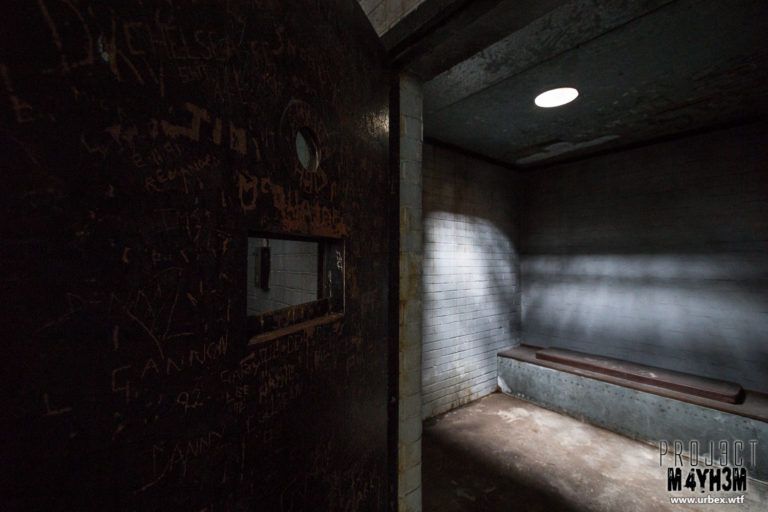
The abandoned Court House located in West Ham, London, was built in 1884 and was designed by Lewis Angell. Built of Yellow brick and Portland stone the building is 3 storeys in parts with smaller extension buildings at the rear which housed the cells and the morgue was in a detached outbuilding…
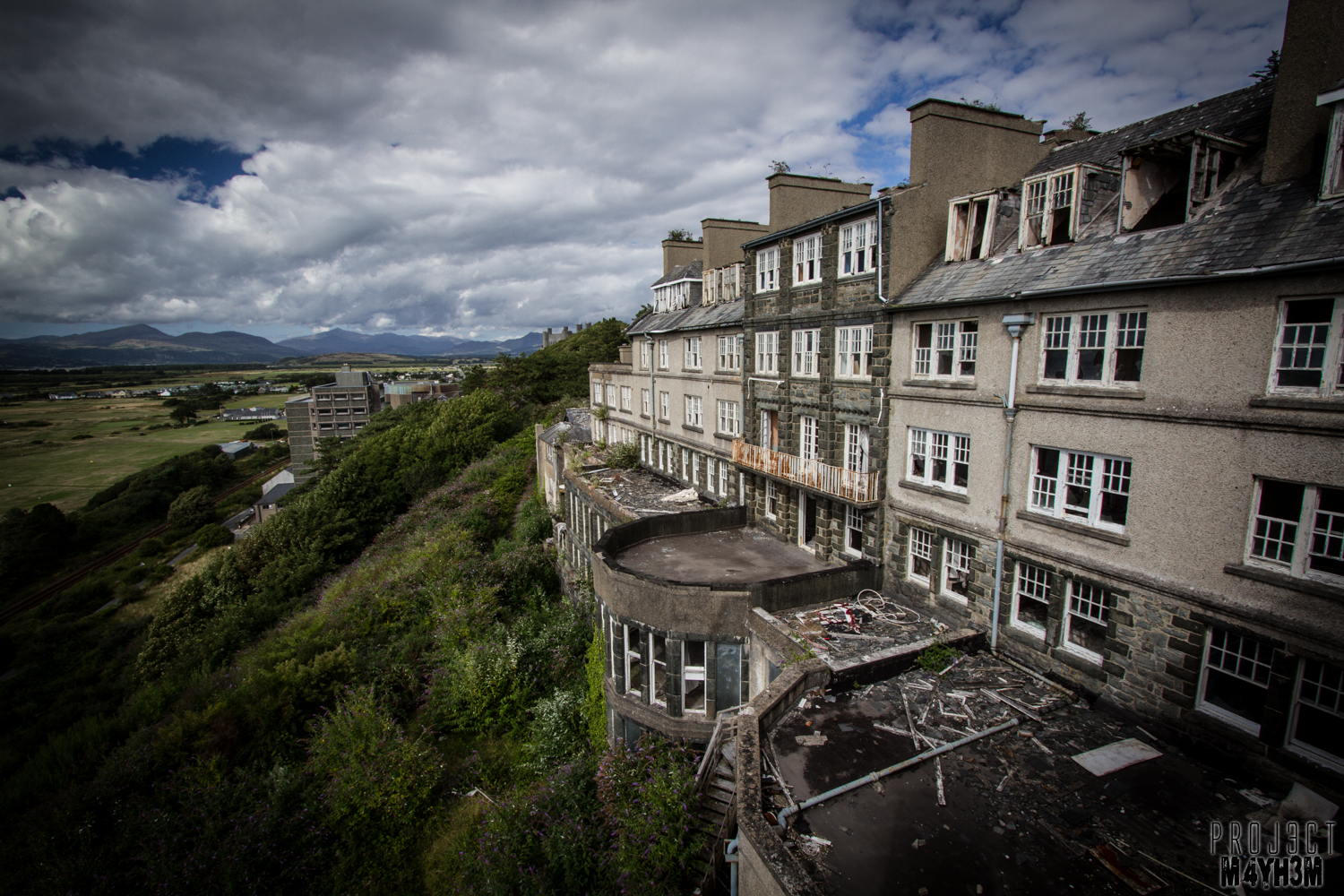
This beautiful abandoned Hotel building sits by the coast on Wales. Disused and stripped of everything and anything of value. You’d think with these sorts of views and the location that someone would have purchased the property whilst it was still in good condition and retained it as a hotel or even converted it into…
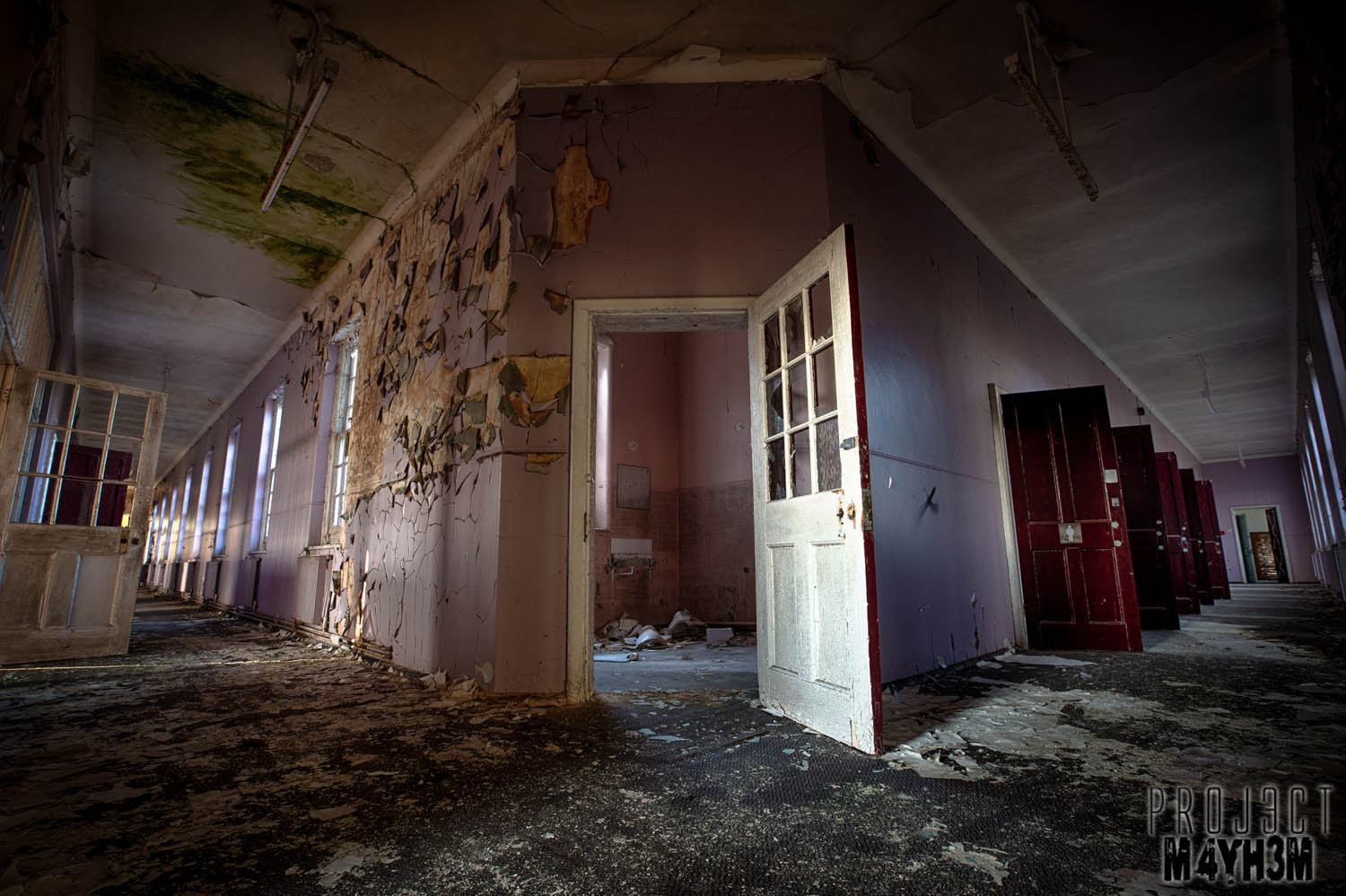
Briefly Severalls Lunatic Asylum aka The Second Essex County Asylum aka Severalls Hospital was built in 1910 and opened in 1913. At its peak the Asylum could house 2000 patients making it one of the largest in the country. Based upon the Echelon Asylum Plan Severalls has become well known for its spiralling Corridors which connect various buildings and the vast amount of bay windows within the wards.
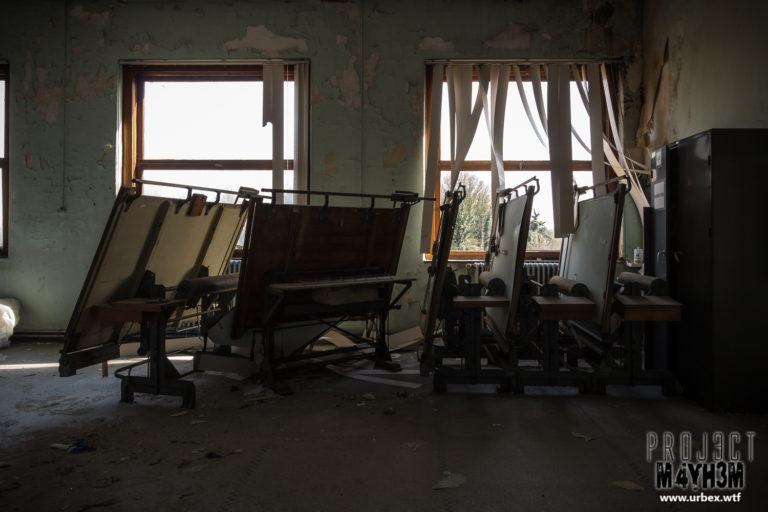
I don’t know very much about the history of this place, clearly whatever this industrial complex used to be it involved a lot of schematics and drawings based on what was left behind. The site clearly had a much larger footprint but most of the other buildings had been demolished and only a couple of admin buildings remained. This one, being the better of the bunch, housed all the old drawing boards and plans along with various offices…
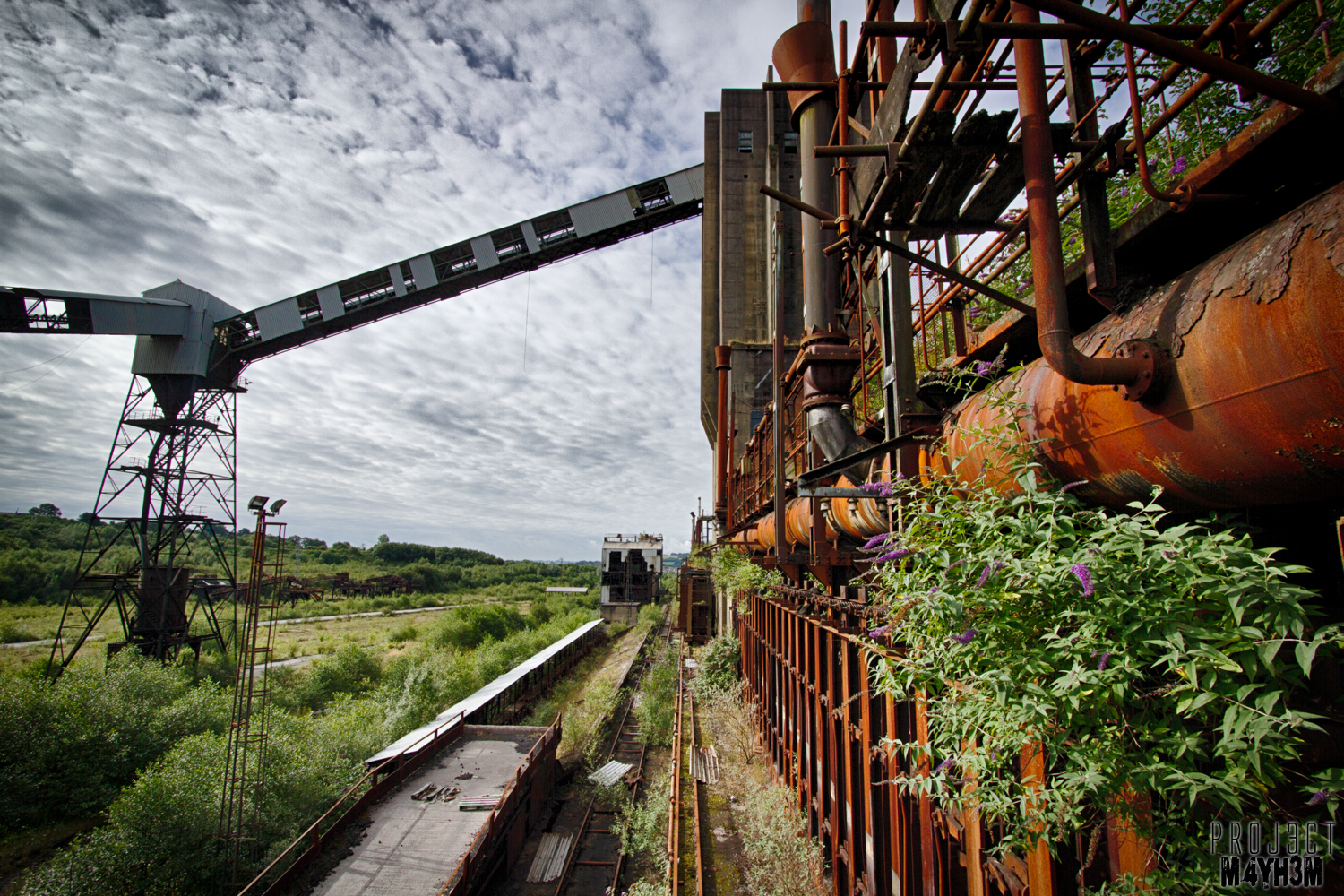
History This huge abandoned site was constructed in 1958 following the establishment of local mines and collieries in the previous 100 years From what I have read the majority of the low sulphur high quality coal which was mined at the nearby CWM colliery was processed here producing high grade coke suitable for foundry use….
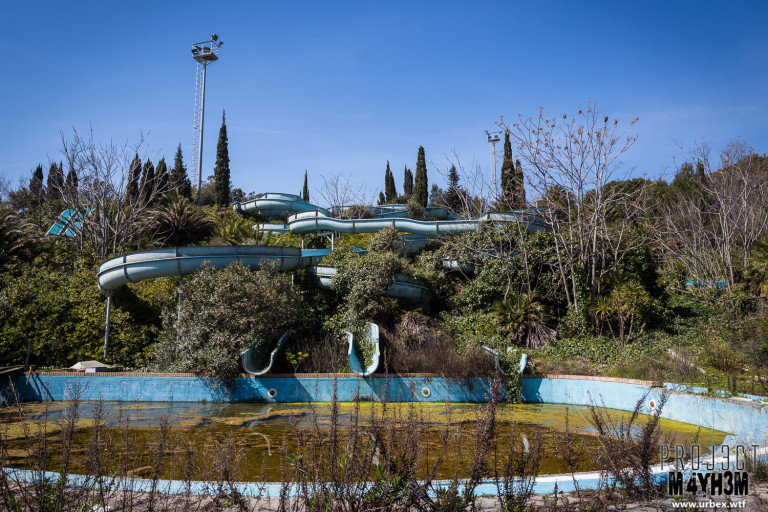
Aquapark is an abandoned water park in Italy. Whilst there isn’t much within this large site to photograph we thought it might be a good idea to take a bit of a break in the sunshine and photograph the main water slides whilst on route to another location…